



Athabasca University RAIC Centre for Architecture's commitment to access, opportunity, and community through innovative research recognized with ASTech award
The innovative architecture research at Athabasca University is having an impact like no other—in our home community of Athabasca, across Alberta, and around the world.
The collective work of AU architecture researchers, submitted collectively as Innovations in Regenerative Design for the Built Environment, won the 2025 ASTech Award for Regional Innovation Champions in Research.
This package highlights ongoing teaching and research projects led by professors Dr. Henry Tsang, Dr. Douglas MacLeod, Dr. Trevor Butler, and Veronica Madonna, with support from program officers Carole Mason and Emma Hansen. Research within the faculty includes blueprints for sustainability in rural communities, mass timber construction, passive solar greenhouses, zero-carbon design, and regenerative communities.
“As a team of architects and engineers, we come to work every day thinking about ways to make the world a better place, one building at a time,” said Tsang, chair of the RAIC Centre for Architecture.
“The world-class research, design, and teaching happening in AU’s Centre for Architecture highlights the tremendous impact our work can have on communities near and far, helping to solve some of the biggest challenges we’re facing in the world today.”
The most recent award adds to the many awards and research grants the team has earned, individually and collectively, since the centre launched in 2012. Architecture teaching and research at AU reflects the university’s commitment to access, opportunity, and community, as outlined in the Like No Other strategic plan.
As a team of architects and engineers, we come to work every day thinking about ways to make the world a better place, one building at a time.
Dr. Henry Tsang, chair, RAIC Centre for Architecture
Open access to architectural education
As Canada’s first online architecture school, the Centre for Architecture at AU provides open access to architectural education—offering an both an undergraduate Bachelor of Science in Architecture and a Graduate Diploma in Architecture. A new Master of Architecture program is current being developed.
The centre delivers academic courses associated with the Royal Architectural Institute of Canada’s RAIC Syllabus program, a pathway for architecture students from non-accredited programs and internationally trained architects to become licensed in Canada.
In addition to the formal course offerings, the centre has published dozens of open educational resources to support architectural education for anyone, anywhere in the world. The RAIC Centre for Architecture YouTube channel also features more than 60 videos on architectural topics, such as Decolonizing Design, a lecture delivered by AU 2023 Honorary Doctor of Letters Wanda Dalla Costa.
The centre is also committed to supporting professional development in the AEC (Architecture, Engineering & Construction) industry. It has partnered with AU’s non-credit unit, PowerED™ by Athabasca University, to develop the Energy Efficiency in the AEC Industry Micro-Credential and the Rural Revitalization Micro-Credential—allowing anyone, anywhere, to expand their expertise.
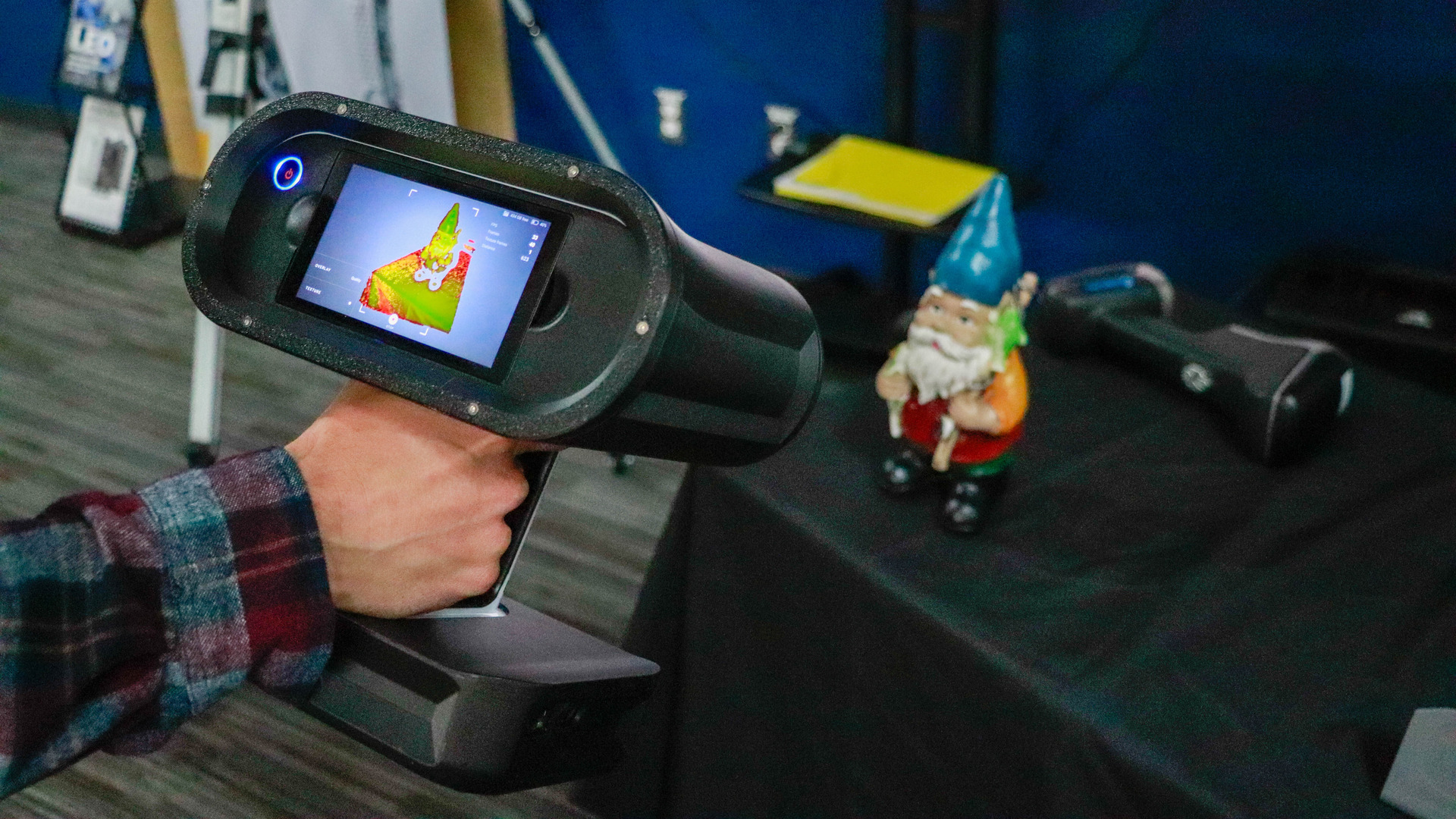
A 3D scanner being used at the Athabasca Architectural Maker Space, which provides tools for AU architecture students.
Opportunities in place and digital space
Students in AU’s programs have access to the Athabasca Architectural Maker Space, allowing them to access cutting-edge technology like 3D printers, 3D scanners, drones, and AR/VR equipment, both in-person and remotely.
MacLeod, who led the development of the maker space, said this means a student or researcher might have equipment like a 3D scanner mailed out for use in their home community. Or it might mean sending a digital file to a 3D printer, having it printed, and then shipping it out to anywhere in the world.
“Nobody combines our unique approach to making these tools accessible,” he said. “Because of our cyber-infrastructure, we’ll be able to access these tools from all over the world, anywhere with an internet connection.”
Access to this space, which opened in June 2025, complements the virtual design studio courses students can join remotely while studying architecture from anywhere in the world.
The centre supports architectural education at the high-school level as well: in partnership with Edmonton Public Schools the team delivers ADST 206: Foundations of Design I, the first virtual design studio course, as a dual-credit offering to high-school students each year.
Nobody combines our unique approach to making these tools accessible. Because of our cyber-infrastructure, we’ll be able to access these tools from all over the world, anywhere with an internet connection.
Dr. Douglas MacLeod, architecture professor
Supporting rural, remote, and Indigenous communities
While many architecture researchers focus on urban issues, the team at AU’s Centre for Architecture is deeply invested in researching issues important to rural and regional communities, including those in Alberta’s north, like AU’s home community of Athabasca.
This includes work to design and build a passive solar greenhouse through a community-driven initiative, Athabasca Grown. Collaborating with residents and other organizations, AU researchers have explored the feasibility of extending the growing season to strengthen local food systems and the local economy—and creating a model that could be used in other northern communities.
Researchers have also explored rural sustainability more broadly, including the Enhancing Rural and Regional Real Estate through Community Learning project, which involved consultations and workshops in four rural Alberta communities, which included online and in-person events with participants from around the world.
That work now continues through a new grant from the Alberta Real Estate Foundation focused on Accessibility and Universal Design in Rural Communities until 2027, as well as the project Quality in Canada’s Built Environment: Seeking Equity, Social Value, and Sustainability, a national SSHRC partnership with universities across Canada. While many of the project partners have focused on urban issues, AU’s team has prioritized housing issues in rural communities.
In addition to making an impact on the rural communities these projects support, architectural research at AU provides many opportunities for students—undergraduate and graduate—to be involved in meaningful, high-impact research projects.
Architecture at Athabasca University
Explore what Athabasca University’s RAIC Centre for Architecture has to offer!