


MATHEMATICS: a language with alphabet, vocabulary, grammar and composition
by J. Peschke
The discipline of mathematics comprises a strata of languages - a layer of natural language over an esoteric notational language having its own alphabet, vocabulary and rules of composition for its paragraphs and essays. Its peculiar grammar of nouns, adjectives, verbs, tenses, clauses and sentences are expressed through its symbols drawn from the Roman, the Greek and even the Hebrew alphabets. For example, I interpret the mathematical expression
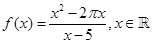
as a mathematical sentence in which the subject is the noun ‘ ’ modified by the adjective ‘(x)’; the verb, ‘=’ (read: is equal to) is in the present tense and the passive voice; the predicate clause is the right-hand side of the equation, ‘
 ’; and a dependent clause ‘
 ‘ is appended at the end of the sentence.
Moreover, quite ordinary English words, such as ‘field,’ ‘ring,’ ‘group,’ ‘manifold,’ and numerous others, may and do have very distinctive mathematical meanings which bear absolutely no relation to their ordinary English language counterparts. Suffice it to say that mathematics has a vocabulary and grammar of its own and those who wish to speak or write its language must understand the individual words and phrases of its structure. A primary task in mathematical discussions is often dedicated to definition, clarification and exemplification of its esoteric vocabulary.
Language, however, is more than just a list of nouns and the infinitives of action. Further in my analysis of the language of mathematical discourse, I began to perceive that its statements were to be interpreted or translated through its peculiar subjunctive and conjunctive relations. Its subjunctives bear a resemblance to the grammatical subjunctive mood of a verb. The subjunctives of mathematics express the possible, the conditional or the dependent relations, rather than the absolute. The essays of mathematics (that is, the major theorems, their corollaries and ensuing propositions with their proofs) are often initially formulated as conjectures or hypotheses in terms of subjunctive relationships. If something may be assumed under certain circumstances (its initial conditions), then such and such may be said to be true. For example, look at the statement of the Factor Theorem.
Given a polynomial p(x) of degree n > 0. Let a be an arbitrary real number.
Then x - a is a factor of p(x) if and only if p(a) = 0.
The Factor Theorem encompasses two subjunctive or conditional relationships, namely:
If p(a) = 0, then x - a is a factor of p(x).
If x - a is a factor of p(x), then p(a) = 0.
In much the same way, the conjunctives of mathematical discourse have a commonality of purpose with the conjunctions of ordinary language as grammatical constructs which connect words, phrases or clauses in both meaning and construction. Rather than being just coordinating or subordinating conjunctions, the conjunctives of mathematics may also take the form of its algorithms, its methods and its minor derivations. These are the aspects of the language which are rehearsed throughout the majority of mathematics classrooms worldwide. If vocabulary forms the base of the language and the subjunctives articulate its statements of truth, then the conjunctives are the ways and means whereby these statements may be justified, clarified and exemplified. They are the glue between the conjecture or the hypothesis and the definitive solution.
If you wish to understand more about how to communicate mathematically, check out the following articles:
- General Principles of Mathematical Communication (from the MAA Mathematical Sciences Digital Library)
- A Guide to Writing Mathematics (by Dr. Kevin P. Lee)
Last Updated by SAS October 07, 2026, 16:00:34

