



After fleeing war-torn Democratic Republic of Congo and spending much of his life in a refugee camp in Zambia, Africa, Bazibuhe “Bazi” Muhabwa could only dream of going to university
Living in a refugee camp in Zambia, Africa, Bazibuhe “Bazi” Muhabwa never imagined he’d be crossing the stage to earn his bachelor’s degree at Athabasca University in faraway Canada.
But against all odds, this June, he will be.
Looking back
Born in the Democratic Republic of Congo, Muhabwa spent years in an orphanage. His name, “Bazibuhe,” means “be strong.”
“I was only three months old, drinking goats’ milk. They thought I wasn’t going to survive,” Muhabwa said.
At age seven, he joined his new family. When war broke out in 1998, the family was forced to seek refuge in Zambia, where they lived in the Meheba Refugee Settlement until Muhabwa was 21 years old.
Muhabwa admired the UN Refugee Agency (UNHCR) workers around him, and dreamed of being like them—to work with vulnerable and marginalized refugee populations.
“I was too young, but I thought, if I can be given that position, maybe I can help even more people because I am a refugee,” he said.
“I asked, how can I join? How can I be part of the staff? They would tell me, ‘go to school, go to school, go to school, go to school.’ So, I got my education.”
In 2015, he enrolled in a child and youth care worker program in Meheba and was later hired by UNHCR in Zambia. Just as he always hoped, he began working with refugees, vulnerable children, youth, and mothers fleeing domestic violence in the community.
I'm an orphan now working for orphans who don't know my story...and I never told them.
Bazibuhe "Bazi" Muhabwa
“They just see how I'm passionate about the work and how I do everything it takes to ensure that each child is empowered. I advocated for resources, for food, for their clothes, for their education.”
He worked there for four years and was often praised and promoted for his dedication and work ethic.
The organization wanted to give him the opportunity to move to Canada to further his education.
In 2017, Muhabwa, his mum, dad, and siblings moved to Edmonton to begin their new lives.

Looking forward
While starting over is daunting for anyone, Muhabwa was also excited. He wanted to see change, to make change around him, and to use the opportunity to its fullest.
“I know what it means to be an orphan. I've seen what it means to be a refugee. I’ve seen what it means living in a less privileged home as well. And so I had that passion that if I can be given a spot to work and advocate, I can do it, so I had that passion of wanting to change,” he said.
None of his educational credits from Zambia were transferrable to Canadian post-secondary institutions, so he had to start over with his education. He began taking English as a Second Language courses at Norquest College and earned a diploma in settlement studies. Then he found AU’s Bachelor of Professional Arts program.
The online format allowed him to continue to work full-time, study, attend leadership training, volunteer, and still show up for his family.
His path to earning his degree was not linear, and it involved sacrifice and dedication.
“One night, after an eight-hour shift, I was still studying past midnight. My mum stood quietly at the door, watching me. Then she softly said, in Swahili “Ka pumzike basi mwanangu” — “Go and rest, my son. You have work again tomorrow,” he explained.
“In that moment, I felt truly seen. She understood the sacrifices. Her prayers, her quiet strength, and the love from my young sister carried me through every challenge.”
He crosses the stage in June in Athabasca, Alta., but has already begun a Master of Arts in Refugee Protection and Immigration from the University of London.
“My career started long before I had a degree. In many ways, it started in Meheba Refugee Settlement in Zambia, where I first learned what resilience, survival, and community truly mean.”
My career started long before I had a degree. In many ways, it started in Meheba Refugee Settlement in Zambia, where I first learned what resilience, survival, and community truly mean.
Bazibuhe "Bazi" Muhabwa
Working with the community
Muhabwa now works for the Action for Healthy Communities as a community development facilitator in Edmonton, where he provides capacity-building resources and supports to newcomers and refugees.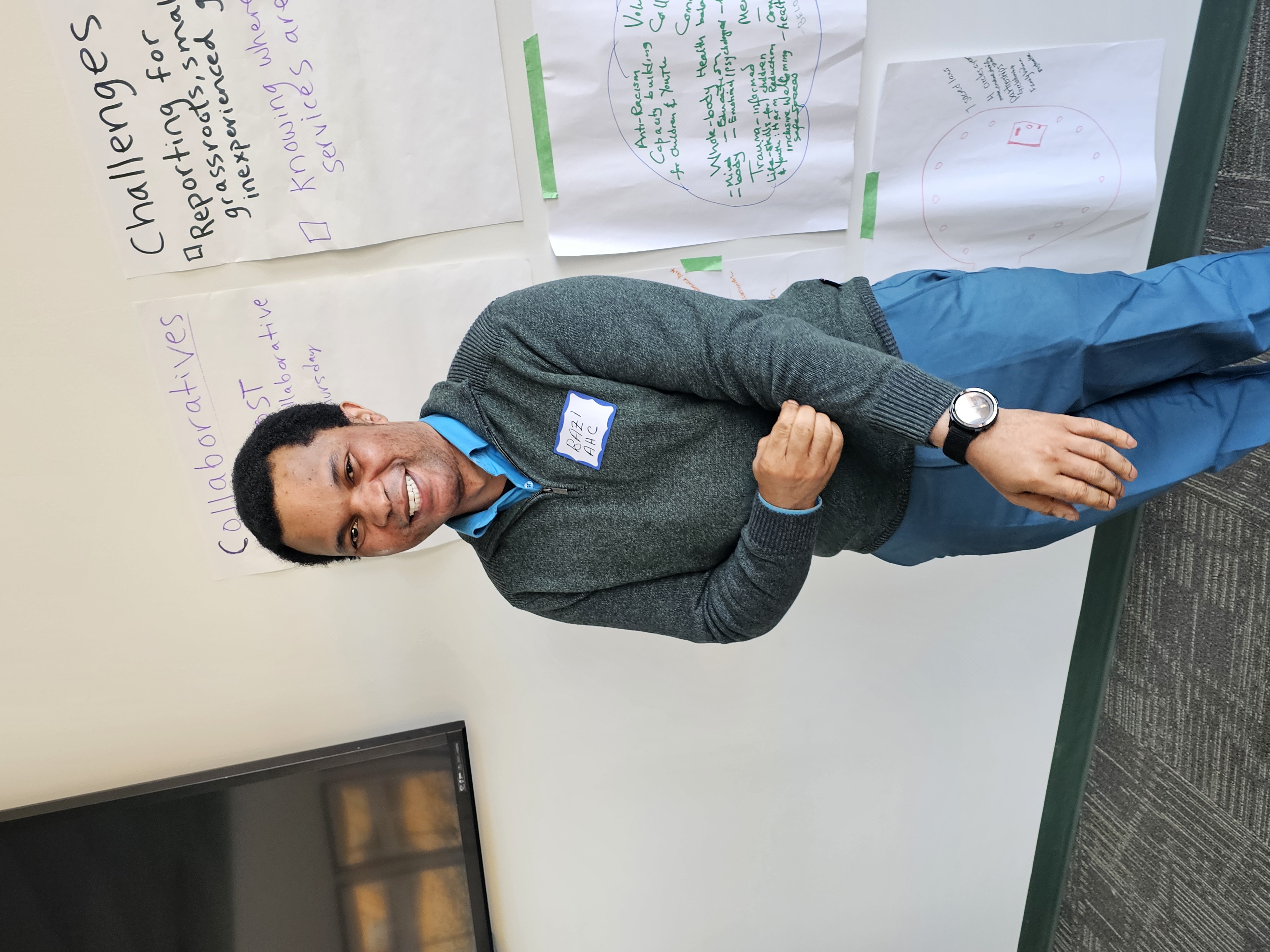
Over the last four years, he has worked with more than 120 communities across Edmonton—advocating for them, finding and applying for seed grants for community-based projects, creating networking opportunities, and doing advocacy work.
His grant work allows the organization he works for to develop youth programs, mental health facilitation, drug awareness programs, career readiness, resilience-building, parental skills, and more.
Muhabwa says one of his focuses is on supporting young immigrants coming to Edmonton and showing them the pathway to university.
“Often immigrants end up losing hope and decide to focus on work and forget about school. But I focus on empowering those from that background because I am from that background.”
Muhabwa emphasized that there are pathways for people to go to school and work, like the ones AU offers, but they require consistency and time.
Reflecting on the impact his work has had, he spoke about his advocacy work with vulnerable children and youth while still in Zambia. Many of them were living in refugee camps, and were given settlement in different countries including USA and Finland.
“I have empowered many young leaders, some of whom I met on the streets of Zambia. Today, several of them are successful business owners. I also supported some in pursuing their education, and many have gone on to build meaningful lives and opportunities in different countries.”
He put his hands over his heart. “From that nothingness to something with their career, something with purpose. That's a huge, huge blessing.”
Telling his story to the world
In 2024, Muhabwa wrote and published a book about his life, something he’d been working on well before he even had access to—or knew how to use—a computer.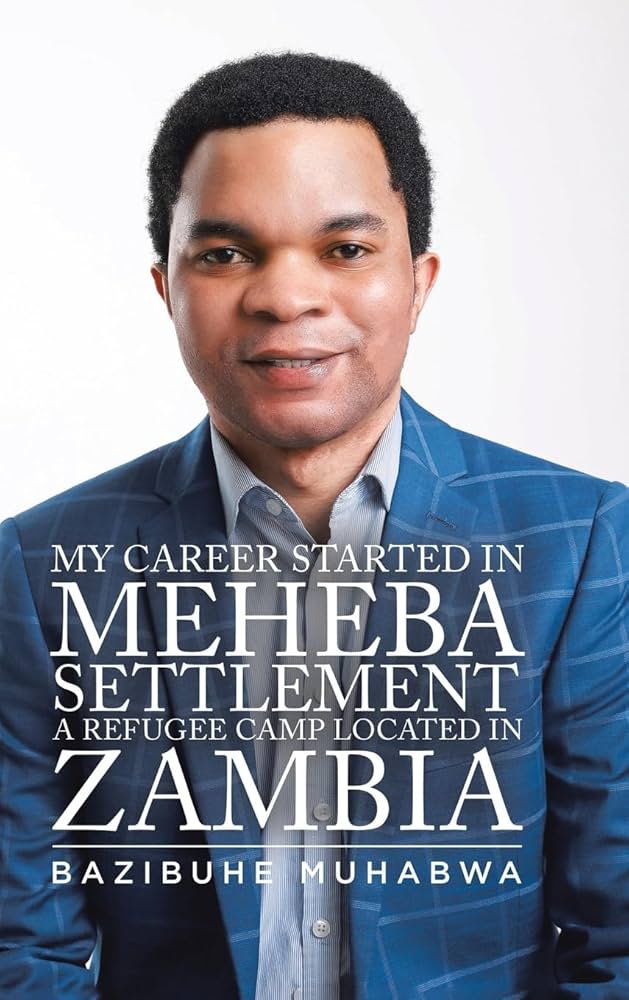
He wanted to find a way to document his life and the challenges he’d overcome to help others in similar places.
“Each time I went to the library, I’d just type things. In my mind, I want people to read about Bazi, the true Bazi. Not the one who is in the field, in the community, with children, with youth, with community leaders, with organizations—the true Bazi,” he said.
His father bought a computer in Zambia, and Muhabwa began using it to write, slowly documenting his life like this for 10 years.
After moving to Canada, Muhabwa began writing more. His short articles, notes, and unpolished thoughts turned into reminiscences of his 25 years of trials and tribulations. In 2019, he found a Vancouver-based publisher to help bring his story to life.
On May 16, 2024, his book, My Career Started in Meheba Settlement: A Refugee Camp Located in Zambia, was launched into world.
In 2025, he learned that his book was a best- seller. He was shocked, and had to ask what “best-selling” meant.
“I wish I could understand and see the impact that this has made, and the impact that I've made around the world” he said.
A strong past, a stronger future
Muhabwa speaks humbly about the adversity he’s overcome. He’s focused on the future, and uses his past as a source of strength to inspire his growth. His experiences have shaped who he is today, and the person he aspires to be.Muhabwa said he was deeply moved to learn that copies of his book have been purchased in countries around the world. Knowing that immigrants and refugees, like himself, can read his story and feel inspired by the possibility of a brighter future means a great deal to him.
The little boy who looked up to the refugee workers in Zambia, only imagining how he could be like them—is now an inspiration to others.
“As someone from a refugee background, you carry not only your own dreams, but the hopes of your family and community. That pressure can be heavy,” Muhabwa said.
I remind myself that I have survived far greater challenges than academic deadlines. I created strict schedules. I used every spare moment wisely. I leaned into my purpose, knowing that this degree was not just for me, but for the communities I serve.
Bazibuhe "Bazi" Muhabwa