



More children than ever are experiencing a range of mental health concerns, and the common denominator is screen time, says AU prof.
Dr. Caroline Buzanko, registered psychologist and assistant professor in the Faculty of Health Disciplines, explained children aren't getting out and experiencing life as much anymore, leading to a host of mental health concerns. The culprit? Screen time.
Excessive, or even moderate screen time can disrupt sleep, increase loneliness, create behavioural issues, and even contribute to things like anxiety and attention-deficit/hyperactivity disorder (ADHD) in children and teens.
“Screens are really affecting our kids and their ability to regulate their emotions. We're seeing way more non-suicidal self-harming behaviours to manage their emotions."
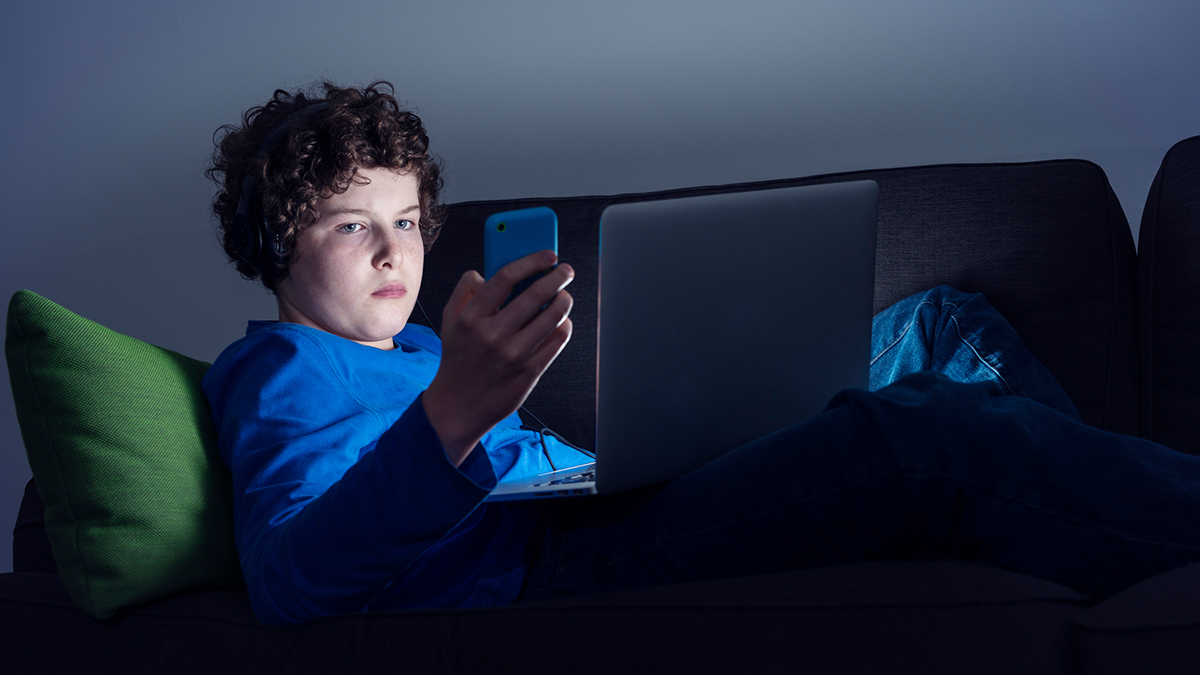
Helping parents with extreme behaviours around screens
According to Buzanko, who has over two decades of experience as a psychologist, one of the hardest things for parents is when their children pull at their heartstrings.
In practice, she's had parents tell her that their children said things like, if you don't give me my phone back, I'm going to kill myself, so the parents become concerned and give the phone back.
Buzanko said that responding by returning the phone is reinforcing difficult behaviours because they've learned that's the language and level of escalation needed to get their way.
I tell parents, I don't even need to work with your kids. If I work with you and the adults in their life, and change your behaviours, that's all I need to do to help kids manage anxiety, manage their emotions, and become resilient.
When parents manage their own anxiety and emotions, it provides good role modelling for their children and allows more opportunities to go and try new things and build confidence.
She explained that the most important thing to do as a parent is to reinforce to children that they can do hard things. That's where learning and resilience comes from, in doing hard things. When children feel anxious about doing something difficult, but then follow through with doing it, their brain learns from the experience.
"They'll discover that even though I'm anxious, I can still go to school. I can still write that test. I can still go to the sleepover. Because otherwise we're inadvertently teaching them, oh, I need to feel calm before I do anything. And that's nearly impossible," said Buzanko.
Anxiety and ADHD on the rise
Research shows a significant increase in anxiety and ADHD in children despite the vast amount of resources and strategies available with screens once again being a significant influencing factor.
"Think about it: If you just have a book, you can't really jump around very much, but you're on a screen, you can have 100 tabs open and we're just jumping," Buzanko said. "It's making us inattentive, so we're definitely seeing a huge increase."
A core challenge for most children is emotion regulation. However, with ADHD, Buzanko explained that the executive functioning part of the brain—the part that is responsible for self-regulation and helps manage emotions—is exacerbated. This affects things like attention spans, hyperactivity and impulsivity, organization, and thought processes.
Screen time guidelines
To help parents who are facing challenges with their children's screen time use most effectively, Buzanko who was named the 2024 Psychologist of the Year, has had to implement some very hard and fast rules in her practice. When working with clients, she explains that they won't make any progress together if the child is on a screen 50% of the time or more at home.
Her screen time use guidelines align to government recommendations, which suggest:
- under the age of two, no screen time at all
- before high school, 30 minutes to an hour at most
- high school age, no more than two hours
- Anything more than two hours can lead to addiction, she explained.
Not only do we give our attention when they're not doing what we want them to do, we give all our attention. We are passionate. We're angry. We use direct eye contact. But are we are giving our full passionate attention when they're being good?
Her suggestion is to reverse that. Parents should give full attention to the things and the behaviours they want to see, less attention to the negative ones, and be very specific and thoughtful about doing that.
Parents are always going to get more of the behaviours they're paying attention to, so always pay attention to the good ones, she said.
Dr. Buzanko on the Ryan Jespersen podcast
Dr. Buzanko joined the Ryan Jespersen podcast to speak about why today's kids are struggling with their mental health and resilliency more than ever.