


After using substances for years, Kira Dunlop has found new purpose as a student and community leader
Life just keeps getting better for Kira Dunlop (Bachelor of Commerce ’22) as she continues to expand her impact on the world.
Since getting sober in 2018, she launched the Boring Little Girls Club, a not-for-profit community organization to support others on the same path. She has worked as a consultant, advocating for and supporting women in business. She has launched her own firm, Catalyst Haven, focused on supporting progressive community organizations with communications needs. Most recently, she got a job in Alberta politics that she loves, where she feels she’s making a positive impact on the province.
“At the end of the day, everything that I've done has been about building community and making sure that people know that they're not alone and that they don't have to face everything alone,” she said. “I feel really passionate about that people aspect.”
Dunlop has also returned to university, completing a goal she set many years ago before her substance use and addiction derailed her plans. With an undergraduate degree in hand, she’s now working toward a Master of Business Administration (MBA) degree, which she started in 2024.
Adding to her growing list of accolades, she is the winner of the 2026 Rising Star Award. This award recognizes an AU graduate who has demonstrated leadership and significant contributions to an area of expertise early in his or her career.
Dunlop’s rise is even more impressive given the many challenges she has overcome along the way.
I cannot say enough good things about Athabasca University, and how thankful I am for all the people who believed in me and supported me. I love AU, and I will definitely be a forever student.
Kira Dunlop (Bachelor of Commerce '22)
A naturally inspired student
Dunlop was always a strong student, inspired in no small part by a family of high-achieving academics. From an early age, she saw the value of education and was drawn to it herself.
Her mother, “the smartest woman I know,” has a PhD in biology and an MBA. Her grandfather was a tenured professor, while her grandmother is a psychologist. Her father, before he passed away, was in law school.
“Everyone in my family has gone through this pretty intensive academic journey,” she said, noting university had been part of her plan for as long as she could remember. “It was never an ‘if I go to school’, it was, ‘when I go to school and where I go to school.’”
Even though Dunlop started using alcohol at just 14 years old—and continued through high school—she never let it affect her studies.
She recalled the day of her high school graduation ceremony, with her grandparents flying in from across the country to help her celebrate. She had been to a keg party the night before, staying up until 4 a.m., but she didn’t let it interfere, attending her graduation despite being extremely sick.
“It was this strange dual life I was living, where I presented as just fine,” she said. “When I got sober in my early 20s, a lot of people told me they didn’t know I had a problem. I’ve always been a high performer, regardless of how things are going in my personal life.”
Dunlop had applied to, and was accepted, at several universities. She had settled on a plan to go to Dalhousie University to study political science and women’s studies, so her academic progress seemed to be right on track.
Meanwhile, she was dating a man 10 years older than her, was continuing a damaging lifestyle, and soon discovered she was pregnant. She deferred her start for university and shifted her plans to focus on raising a baby, when she tragically miscarried.
Her mental health spiraled, her partner left her, and she turned her attention once again to education. Within two days, she had revoked her deferral and was heading to Halifax, N.S., to start university.
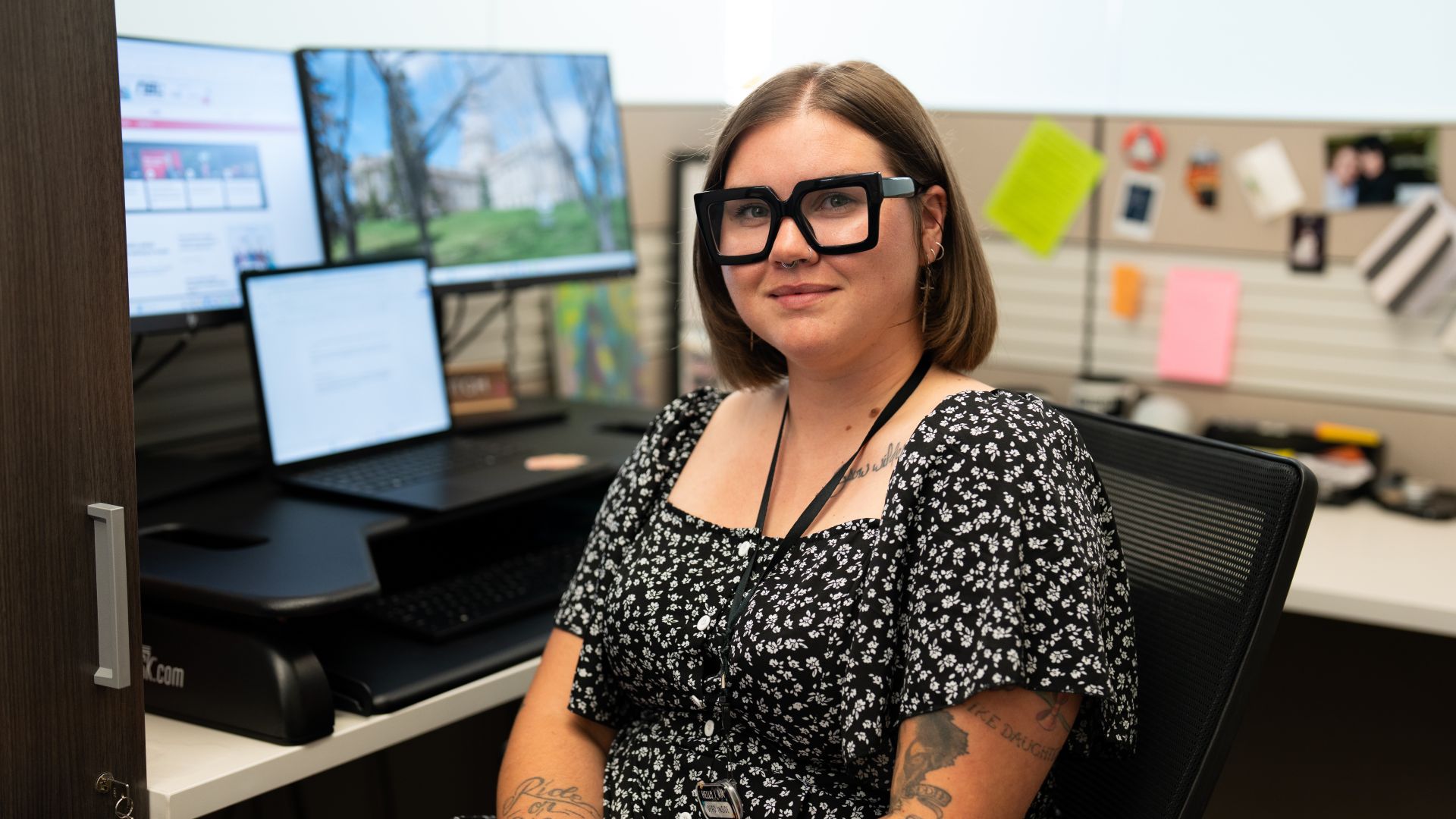
Prioritizing substances over education
Dunlop presented well in classes and convinced herself she was doing fine.
“But that just led to more and more and more numbing and drinking and not wanting to feel any of my feelings.”
Meanwhile her ex-boyfriend had moved across the country to rekindle the relationship. She moved in with him, and old patterns repeated themselves. After a summer of using drugs and alcohol, she tried returning to school at the University of Calgary but prioritized her addiction while her studies fell by the wayside.
Dunlop thought moving would provide a fresh start and registered at the University of British Columbia in Vancouver. But her new roommate kicked her out within days because of the drugs and alcohol.
“That’s how I ended up living in a single-room occupancy on the Downtown Eastside, and getting very into cocaine,” she said.
She recalls going to class “high as a kite” and hearing traumatic stories about serial killer Robert Pickton, who targeted women in the area. A multi-day drug binge and mental break followed, making school impossible. She continued working full-time, but dropped out without telling anyone.
“I failed everything. I got zeros across the board, and nothing like that had ever happened to me,” she said.
She returned to Calgary, but her substance use continued. Drinking daily, often to the point of blacking out, after a particularly bad night out, she woke up the next morning with no memory of what had happened.
“I remember looking at myself in the mirror, thinking, I’m going to die,” she said. “If I continued to drink and continue to use, I knew I was going to die.”
And with that realization, she put her foot down and decided she was going to get sober—she hasn’t had a drink since Sept. 1, 2018.
A ‘boring little girl’
After Dunlop stopped using alcohol and drugs, she focused on education, community activism, and social justice.
She attended one recovery group meeting but did not feel it was a good fit because of its religious element. Sobriety was something she wanted to pursue on her own, but she found it lonely. One person in her life even dismissed her as “a boring little girl.”
Rather than taking that as an insult, Dunlop embraced it, becoming the driving force behind the Boring Little Girls Club, a social space for women, trans, and non-binary people to gather without drugs or alcohol. She specifically avoided any prescriptive recovery aspect, respecting individuals’ own journeys.
“One of the philosophies that came to me through the Boring Little Girls Club is that I can only speak for myself. So, I’ll never tell anyone what recovery has to look like for them,” she said. “I just wanted to have fun, without having to go into the whole long story of why I wasn’t drinking.”
The club grew, attracting the connections Dunlop had been seeking and eventually gaining national media attention. As membership expanded, she recognized the need for greater structure and safety, including defining “sober” and determining who could attend.
The group remained active for nearly five years, during which Dunlop’s life evolved. She had a child, returned to school, and was no longer new to sobriety. Recognizing that she needed to move on to keep growing, she, along with the board, decided it was the natural time to end the Boring Little Girls Club.
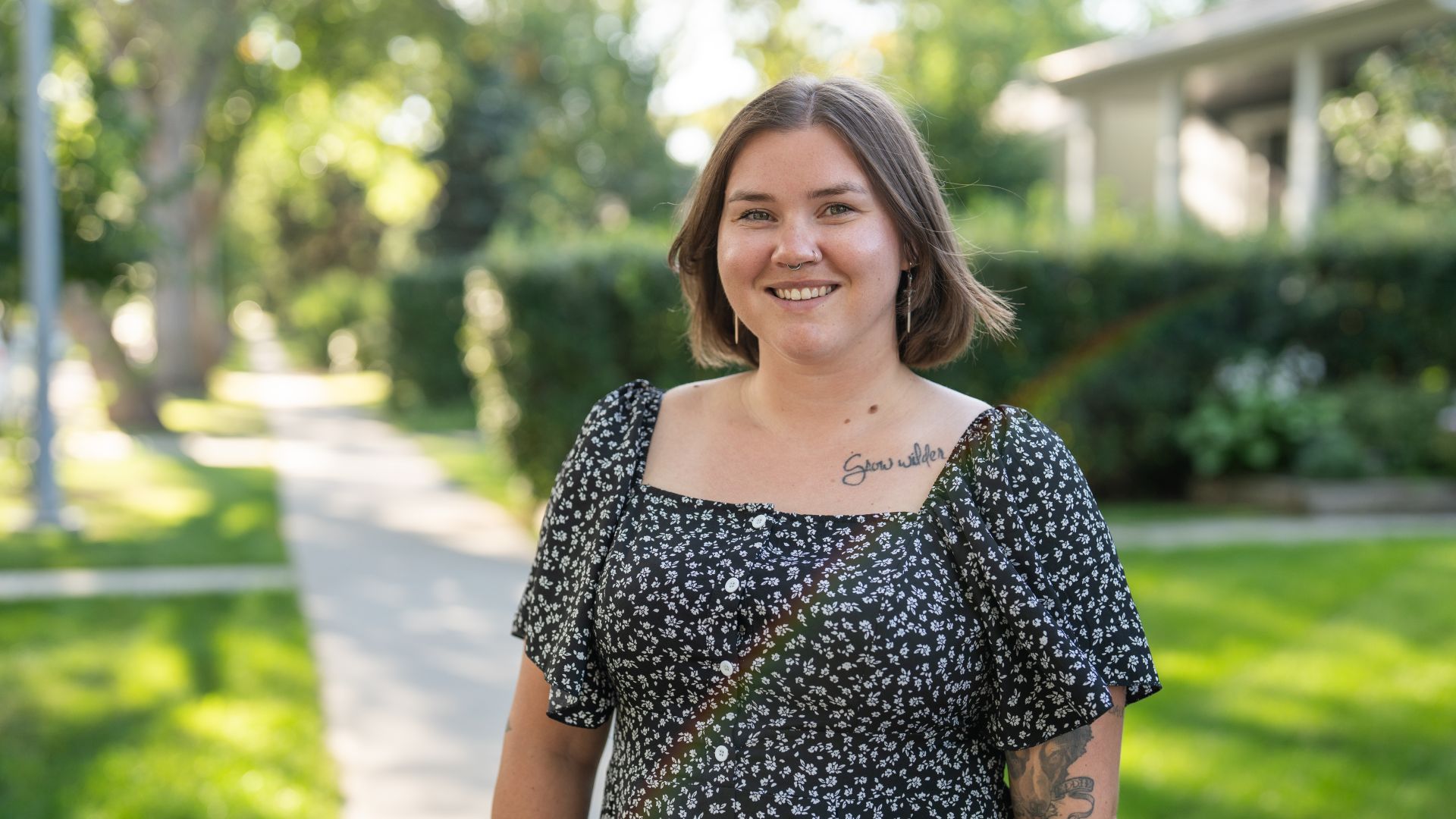
Education drives a rising star
When Dunlop had wanted to go back to school, there were few options for her, given her history of dropping out and failing classes due to her substance use. An advisor suggested she take some classes from Athabasca University and reapply to other schools.
After exploring AU, she realized there was no reason to transfer out.
“Why would you transfer? You can still get a degree, you can work full-time, and you don’t have to jump through hoops,” she said. “They took 90 per cent of my transfer credits from the three universities I had left. Why would I go back to a traditional university?”
After finishing a few courses, she realized she could do it, and do it well, so she just didn’t stop.
She switched to a Bachelor of Commerce degree to help her make the kind of impact she wanted to make. When she completed that, she registered in the Master of Business Administration program, which she expects to complete in 2028. And she doesn’t intend to stop after that; she’s already planning to apply for the Doctor of Business Administration program.
Although Dunlop’s not aiming to become a titan of industry, she said she has been able to put what she’s learning to use every day—whether in her previous leadership role with the Boring Little Girls Club, working with provincial harm-reduction organizations, supporting not-for-profit organizations through her communications firm, or in her current role working to support elected officials with Alberta’s Official Opposition.
“I cannot say enough good things about Athabasca University, and how thankful I am for all the people who believed in me and supported me,” she said. “I love AU, and I will definitely be a forever student.”