


Dr. Nazli Parast, an advanced care nurse with the University of Ottawa Heart Institute, says her lifelong commitment to education is about better serving her patients and profession.
For some people, education is simply a means to an end—career growth, a better-paying job, or a way to better support one’s family and community
Education has indeed provided those things for Dr. Nazli Parast (Master of Nursing ’18, Doctor of Education in Distance Education ’23), whose career as a nurse, educator, and researcher has made an impact on countless people. But in addition to helping others, learning has always been a means of escape.
“For me it’s about what more I can offer to humanity, but also to myself,” she said. “It helps me escape the world, and I can do a better job where I am.”
She currently works as an advanced practice nurse in the women’s heart health clinic at the University of Ottawa Heart Institute, a role the combines her passions for working with patients, educating others, and research.
Throughout her career, she has continued to study for higher-level credentials, and relentlessly pursued a variety of certifications to improve her skills and knowledge in specialty areas, such as bariatric medicine and diabetes. This allows her to better support her patients and other clinicians.
In recognition of her remarkable dedication to education and service to others, she has earned the Athabasca University 2026 Lifelong Learner Award. This award recognizes an AU student or graduate who seeks to expend their knowledge and skills through continuous learning, through both formal and informal learning pathways.
Studying is one of the things that makes me forget about my difficulties. Since I first arrived in Canada, that’s always been the thing that’s given structure to my life.
Dr. Nazli Parast, (Master of Nursing '18, Doctor of Education in Distance Education '23)
A lifelong inspiration to learn
Parast knew she had a knack for learning at a very early age. Growing up in Iran, she graduated high school at age 16.
This put her only a year behind her older brother, which was a huge advantage in her own studies.
“He would study very hard and repeat things over and over,” she said. “As he was doing it, I was unintentionally memorizing the things he was studying.”
The next year, when Parast would do similar assignments, she was easily getting great grades.
This aptitude for learning, and learning quickly, was a key asset when she left Iran and moved to Ottawa, Ont. She wanted to study at Carleton University, but there was a big hurdle to overcome first: she didn’t speak a word of English. After only a year of studying English, she was proficient, and was ready to start her undergraduate degree.
She had planned to go to medical school, but her status as an international student contributed to a series of legal and logistical challenges that made that impossible.
Having already put down roots in the Ottawa area, she wasn’t interested in moving. She decided to pursue nursing instead, so she could still work in health care. She received a full scholarship but again faced complications as an international student and couldn’t make use of it.
Undeterred, Parast registered in a nursing program through the University of Ottawa, and in 2011, she finally achieved her goal of working as a nurse.
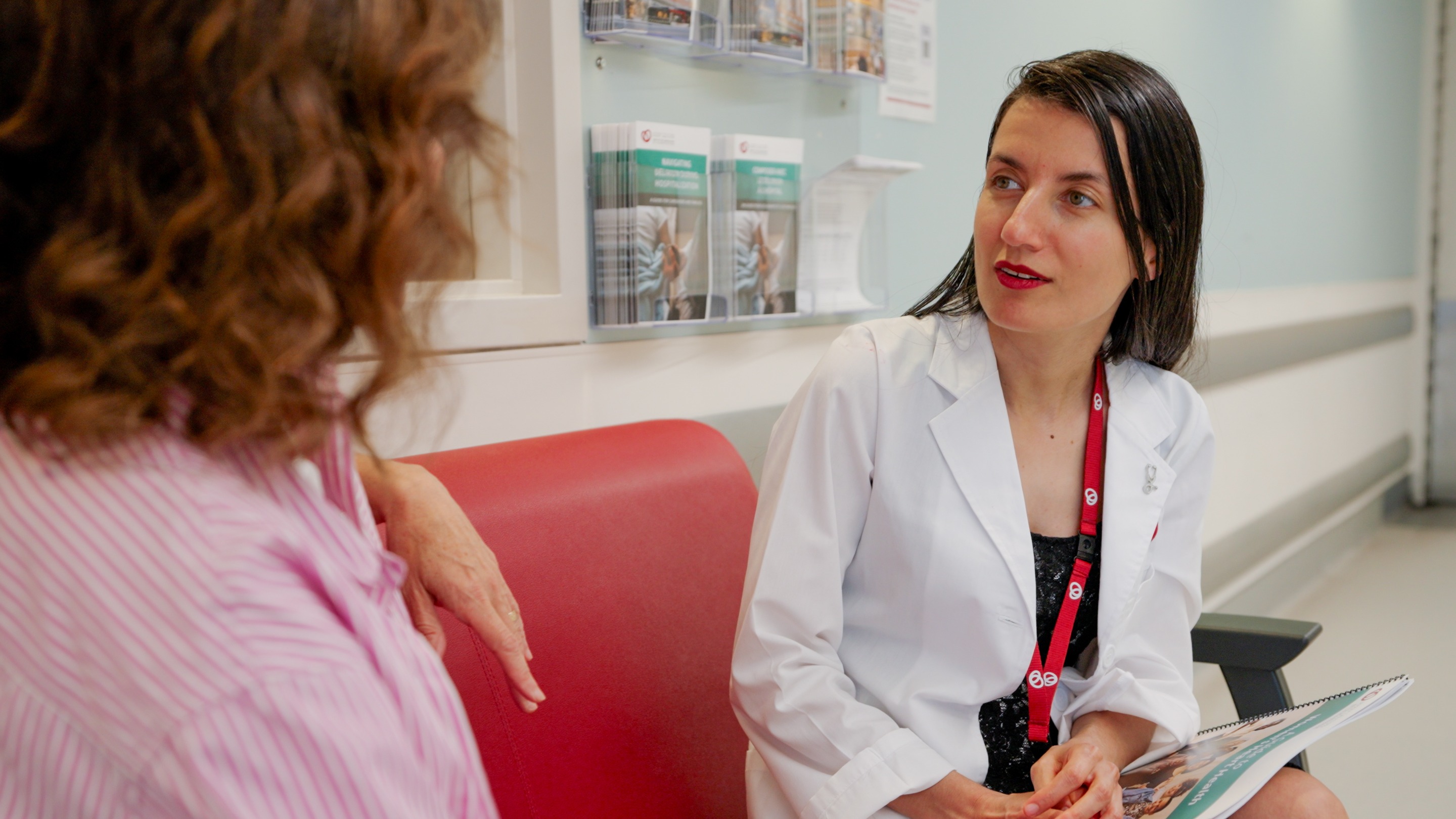
Finding a career in nursing
Even before she had started working as a nurse, Parast had taken on as much research-related work as she could, including with the University of Ottawa Heart Institute, where she now works full-time.
“Since I arrived in Canada, I basically volunteered in research areas and then became a research assistant and later became a research manager,” she said. “Research has always been in my path.”
When she began working as a nurse, she found jobs that allowed her to work in research, along with clinical nursing roles in hospital and community settings.
“I started working seven days a week, long hours across multiple jobs,” Parast said. “I worked all the different rotations and different shifts.”
Throughout this time, her educational focus continued to be in broadening and deepening her understanding of specific aspects of the job so that she could better support patients.
Her focus on education was also about helping herself; she said education has always been where she turned to escape various challenges and frustrations in her life.
“Studying is one of the things that makes me forget about my difficulties,” she said. “Since I first arrived in Canada, that’s always been the thing that’s given structure to my life.”
Pursuing advanced degrees, continually improving
Given Parast’s lifelong dedication to education, and the fact that her siblings had all pursued advanced degrees, it was only a matter of time before she, too, would pursue graduate education.
Working full-time as a nurse in roles she loved, and balancing other responsibilities in her life, she needed a degree program that would be flexible, with a high level of academic rigour and credibility. She had heard of various international programs that people had told her were easy, but she knew that wouldn’t satisfy her.
“It’s not just about passing. For me it’s about getting the best grade possible, so I wanted to have a degree from a credible, recognizable institution,” she said.
Parast has heard about AU from a physician who had done a master’s degree, and she soon discovered the Master of Nursing program at AU had everything she was looking for.
After completing the master’s program and working in a role where she increasingly found herself in a position of teaching others as a nurse educator, she knew there was still more opportunity to improve in her role and better serve the people around her.
Although she worried about how to balance a doctoral program with her increasingly demanding professional role, she felt confident that AU’s flexible model would once again work for her, and enrolled in the Doctor of Education in Distance Education program to explore and improve her approach to teaching others.
“For me, education is more than just giving information, it’s about making sure the person receiving it is comprehending it,” she said. “Education means nothing if the person sitting in front of you doesn’t understand it.”
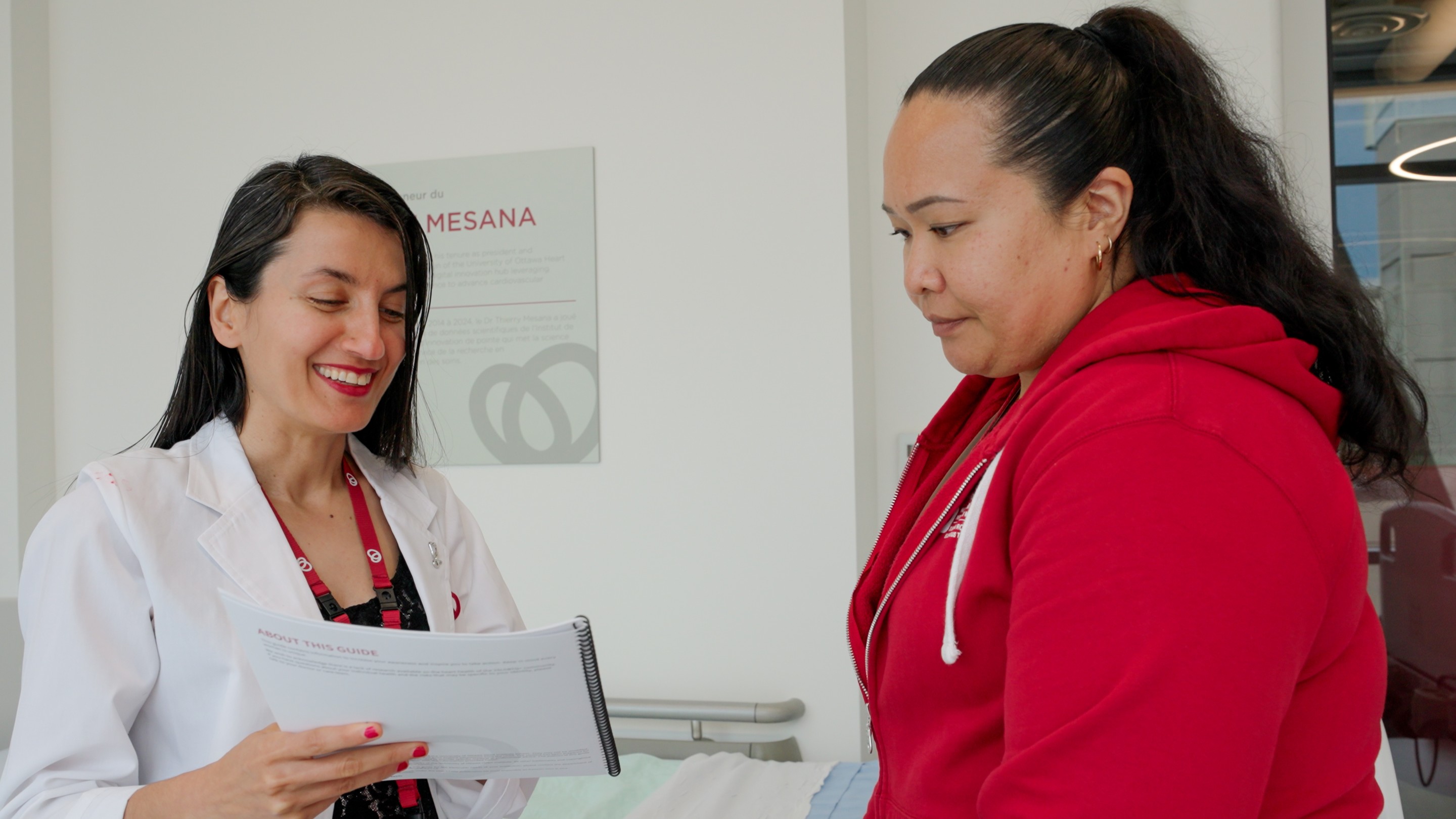
Meeting the future with focus and dedication
Having completed her doctoral program, Parast’s dedication to learning is undiminished. She continues to pursue new learning opportunities to help her improve her work—whether serving patients, educating other health professionals, or the ongoing work of research and advancement—in her chosen specialty area of women’s heart health.
“I found my passion in women’s heart health. I worked in so many different clinics, places, and areas, but women’s heart health is uniquely challenging,” she said. “It’s the most challenging clinic I’ve ever worked in.”
She continues to direct her learning to help her to meet the challenges she’s seeing. For example, she has recently become very interested in artificial intelligence.
Parast sees AI as an exciting tool that can help improve assessment. She noted research has shown that when computers are used to help in assessing women’s symptoms, diagnoses are less likely to be missed, which has clear implications for improving outcomes for patients.
“AI can catch the little subtle changes and differences that human eyes might not,” she said. “Especially with women in rehab, our hearts are smaller and beat faster, are more likely to have microvascular disease because we have more small branches of arteries in our heart.”
Most importantly, she plans to keep learning and striving to always improve.
“I feel like everything, education and research, they’re all for humanity and for patients,” Parast said. “No matter what, my goal is always the same: to improve human life.”