


Master of Counselling graduate Ruth Strunz is working to improve the experience of neurodivergent clinicians and patients across the world
There are many places Ruth Strunz (Master of Counselling ’16) has yet to travel, but her innovative ideas about neurodiversity-affirming psychotherapy are improving lives worldwide.
In her professional practice as a therapist, consultant, author, and speaker, she focuses on the quality of the therapeutic alliance: the unique client-therapist relationship that allows trust to develop and change to happen.
“The space where a neurodivergent client needs a different kind of support than they have previously received, to make the changes they want to make, that’s the place where my work lands,” she said.
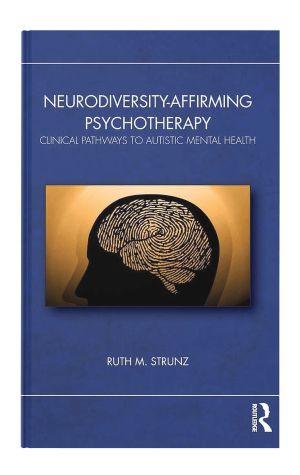
Strunz’ book, Neurodiversity-Affirming Psychotherapy: Clinical Pathways to Autistic Mental Health, explores the cross-neurotype therapeutic alliance: the therapist-client relationship when one or both have atypical neurotypes, such as autism or ADHD. It provides insight to help therapists support clients whose neurotypes differ from their own.
Before her book, little had been written on the topic—and the overwhelmingly positive response has demonstrated the importance of a new approach.
“It became clear to me that therapists needed this book,” she said. “It’s wonderful to hear from clinicians across the world who are using it in clinical practice, and often at home, too.”
For her groundbreaking work in neurodiversity-affirming mental health, and in recognition of her commitment to learning, Strunz has earned the Athabasca University 2026 Distinguished Alumni Award. This award recognizes the accomplishments of an AU graduate who brings honour and prestige to the university.
The accomplishment is even more impressive considering her early experiences. While always dedicated to social justice and mental health, it wasn’t clear in her early life that she would be able to get the kind of education she needed to make the impact she has.
Growing up, there was no support for the possibility that I might have an active, intelligent mind that was worth educating. That was a challenge, because I do, as it turns out!
Ruth Strunz (Master of Counselling '16)
Why educate girls?
Born into a refugee family in Ireland—her father’s Jewish family had fled the Nazis in 1938—Strunz wasn’t necessarily destined for higher education.
The prevailing attitude in 1960s Ireland was that it was pointless to educate girls, since their adult role would be to run households and raise babies. Her parents were honest, hardworking tradespeople, but there was no money for education and student loans weren’t available, so attending university simply was not discussed.
“Growing up, there was no support for the possibility that I might have an active, intelligent mind that was worth educating,” she said. “That was a challenge, because I do, as it turns out!”
This became obvious in secondary school, when Strunz’ teachers saw her potential and recommended to her parents that she pursue university—which was a non-starter.
However, one teacher suggested applying for a government-funded scholarship to Pearson College in British Columbia—a United World College (UWC) that balances higher-level academics with community service and social justice.
The UWC philosophy is that if teens from across the globe live and study together, and learn to resolve their inevitable conflicts respectfully, they may become leaders who impact the world in peaceful, sustainable ways,” she said.
After winning a scholarship that covered tuition, housing, and travel, Strunz completed her Grade 12 and the equivalent of first-year university at Pearson College.
The experience solidified her dedication to learning and social justice and strengthened her self-confidence. Returning to Ireland, she recalls pushing the idea of university to the back of her mind, believing it would re-emerge when the time was right.
Building a career path
After Pearson College, Strunz began training as a nurse. In Ireland, nurses learned on the job for 12 weeks, followed by a short classroom block to discuss the clinical procedures they had participated in.
She had some ethical concerns around what student nurses were expected to do without any training to speak of, and because patients were not informed these young nurses were actually students. She recalls getting in trouble for asking too many questions about this and other aspects of the training program.
“Those questions were really important, and needed to be asked,” she said. “I chose a career in nursing because I wanted to care for people, but there was no space for the kind of care I wanted to provide.”
“Within a year I had to walk away. I simply couldn’t do it.”
Determined to make a career change, Strunz relocated to Spain, where she guided tours for an Irish travel company. She spoke several languages, including her native Gaelic, and she quickly added Spanish to the list while working and traveling in that country.
Although she enjoyed working in tourism, it didn’t offer the meaningful opportunities she wanted, to help and support people to improve their lives and well-being.
“I needed to be in service to the community, and although I didn’t know it at that time, I also needed enough challenge to keep my ADHD brain engaged and happy,” she said. “In retrospect, a university education was inevitable all along!”
Inspired to help others
Knowing many Pearson College graduates had studied at Trent University in Ontario, Strunz applied. She studied international development and Spanish, finding herself drawn to understanding the refugee experience, partly because of the pervasive silence within her own family about her grandparents’ flight from Vienna.
“By gradually gathering the puzzle pieces to construct a somewhat coherent picture of what happened to my family, I began to find the real roots of my many unanswered questions. And I began to value my need to speak truth, exercise compassion, and alleviate suffering,” she said.
Strunz wanted to work for an organization like the Canadian International Development Agency or a not-for-profit development organization, so by the time she graduated, immigrating to Canada became a priority.
This meant returning to Ireland to develop a skill that was in high demand. At the time there were few Canadian teachers trained in the Montessori method—an early childhood educational approach that centres on a student’s abilities and interests and progresses at their own pace.
“I did a placement in a classroom for young children with Down Syndrome, and it rocked my world,” she said. “I was intrigued by how this unique, experiential learning community was developing; identifying and meeting its own needs from within.”
For example, the children took turns serving the daily snack. Strunz recalls the calm, dignified expression on one child’s face as he offered a plate of cookies around to his classmates, while the adults observed quietly, without active involvement. She was deeply moved, watching the child fulfill his role with confidence and delight, both of which she now considers foundational to mental health.
“Neurodivergent kids are often deprived of opportunities to help other people,” she said. “Adults step in with good intentions, but mental health is damaged when kids are helped when they don’t need help. At home and school this happens too often, in service of meeting erroneous, neuro-normative, social expectations.”
Expanding her positive impact
Strunz worked as a Montessori teacher for many years, eventually opening a publicly funded Montessori school in Ontario, to increase access for families who couldn’t afford it. She also directed the opening of a Montessori school for autistic students in California, while providing guidance and support to parents.
Through this experience, she identified a need that she wanted to meet—designing and providing effective, neurodiversity-affirming supports for parents of autistic/neurodiverse children.
“The neurodiversity-affirming paradigm hadn’t yet emerged when I was a new parent,” she said. “Upon diagnosis, the messaging from health-care providers about what lay ahead for my own neurodivergent family was overwhelmingly negative.”
 Motivated to support parents of neurodivergent kids and fuelled by her own lived experience, Strunz sought out a counselling psychology degree that would fit her busy schedule as a single, working parent. The flexible, online degree at AU was the right fit, as she could participate in classes and do assignments after her kids were tucked into bed.
Convenience aside, she appreciated the blend of high-quality instruction and guidance, and hands-on training during summer residencies. At AU, she pursued the research that eventually became the blueprint for Neurodiversity-Affirming Psychotherapy.
She now has a full-time clinical practice and regularly provides consulting, training, and clinical supervision to clinicians and educators working with neurodivergent clients. Steadily increasing requests for training ultimately prompted her to write her book, to raise awareness, and increase access to the neurodiversity-affirming paradigm for mental health practitioners worldwide.
Strunz recently expanded her research, exploring ways to support neurodivergent clinicians as they navigate education, licensing, and clinical practice—another need she sees regularly within her own work.
“This generation of autistic folks is extraordinary. They have incredible capacity for making positive change in the world. But neuro-normativity is still pervasive in health care and education, and neurodivergent individuals encounter systemic obstacles to their own well-being daily,” she said.
“We humans naturally seek meaningful lives; I’m honoured and deeply grateful to know that my work has been helpful to the autistic/neurodivergent community.”