Bachelor of Nursing grad Shawna Gork finishes AU degree after 15 years despite personal tragedy, health challenges
For 15 years, Shawna Gork (Bachelor of Nursing ’25) worked on her degree, finishing one course at a time—and overcoming one major life challenge after another.
She started the degree as a single mom, worked through the tragedy of losing both parents in a car crash, was diagnosed with and treated for breast cancer, and got COVID-19 at the very start of the pandemic while working as a front-line nurse.
In July 2025, after 15 years of persistence and resilience, Gork submitted her final assignment. She will join the Class of 2026 as part of convocation next month, completing a journey that began decades ago on the rural Manitoba farm where she grew up.
“This is dedicated to my mom, in memory of her,” she said. “I know she’s going to be smiling down.”
It was a crazy journey for 15 years, and here we are on the other side, thanks to my parents who gave me that strong foundation: great morals, work ethic, kindness, and humble beginnings.
Shawna Gork, Class of 2026
A farm girl at university
Growing up on a farm near Neepawa, Man., Gork was raised by parents who never attended university. But both of them, especially her mother, always encouraged her to pursue an education.
“She didn't have the opportunity, her circumstances dictated that,” Gork said. “Her dad died when she was five, and she had seven siblings. Growing up on welfare, higher education was never an option for her.”
Growing up, Gork was always drawn to science. She volunteered in hospitals and care homes as a teenager and learned that while she disliked the care-home environment at the time, she was fascinated by the laboratory side of medicine.
At 17, she moved to Winnipeg to take a lab technician program but found city life to be overwhelming. She recalls returning one day to the apartment she shared with two roommates to find them physically fighting, one literally holding the other against a wall by her throat. That experience gave her pause—she quit the program and left the city.
“I was a real farm girl,” Gork said. “I just didn’t do well with violence. I never saw that growing up and it was shocking to me."
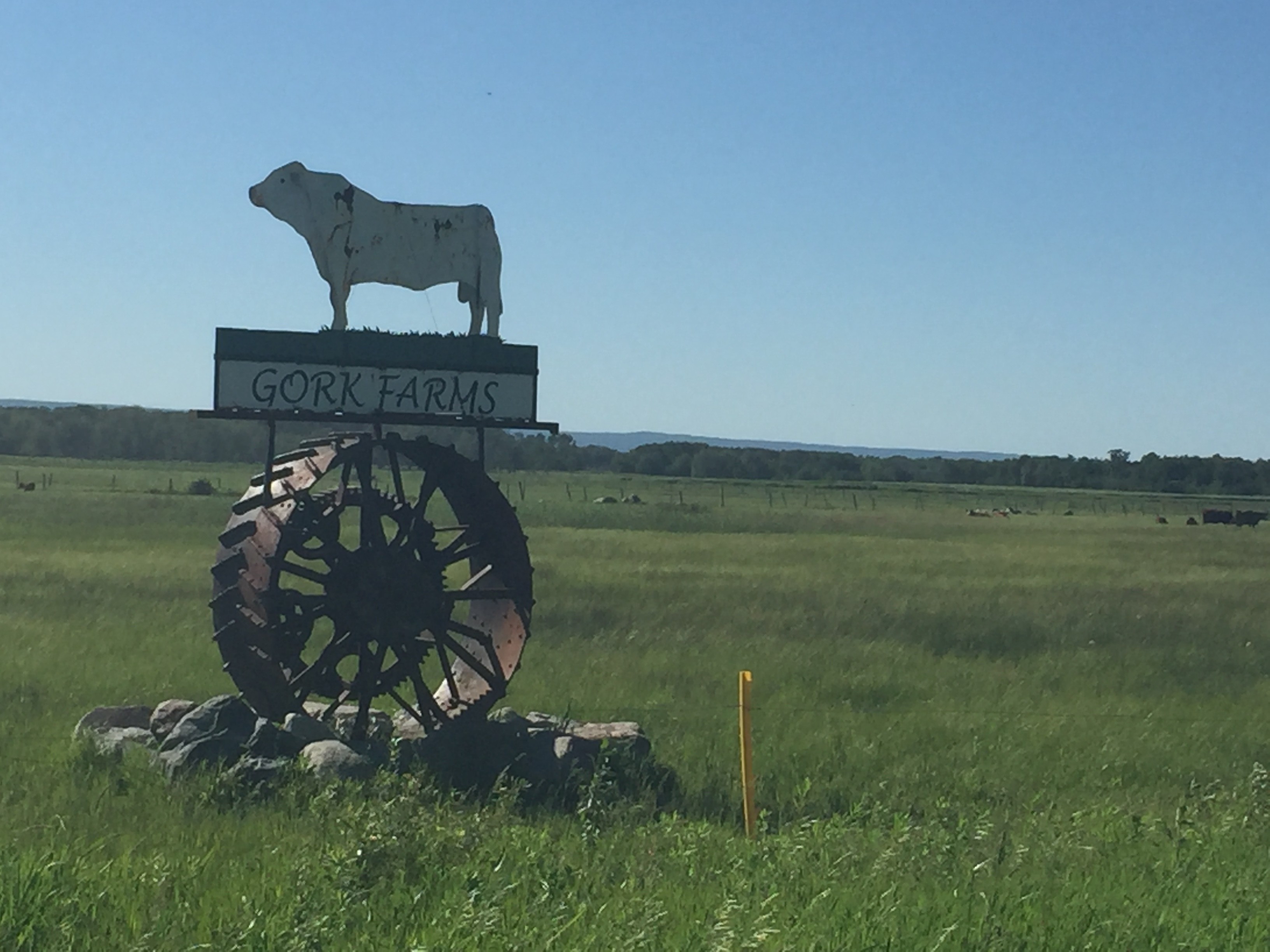 Bachelor of Nursing grad Shawna Gork grew up on a farm in rural Manitoba
Finding a path to nursing
Homesick and shaken, Gork returned home. Her passion for post-secondary education endured. She enrolled in science courses at Brandon University, which was closer to home, and her brother was also studying there.
Her path shifted towards nursing, in part because of interactions with her brother's girlfriend (now wife), who was studying nursing. After attending her graduation, something clicked, and Gork realized this might be the right path for her. She registered for a two-year nursing diploma at the Brandon General Hospital School of Nursing and graduated in 1995 as a Registered Nurse—this was before professional requirements for RNs changed to a four-year degree.
Jobs were few and far between in Manitoba at the time, so Gork moved to British Columbia, where she could only find part-time work as a nurse—supplementing that work with shifts at a local bakery.
“I loved my job and I loved what I did, but it also made me appreciate that you’ve gone through nursing and you have this skill, and you probably should put it to use,” she said.
Within two years, she returned to Manitoba to work full-time in rural hospitals, where nurses often handled everything from emergency care to labour and delivery.
“That’s what I love about rural medicine,” she said. “You get to do everything.”
Over time, she took additional training in critical care nursing and considered a university degree to advance her career. By then, however, life had become more complicated. She was working full-time, raising a son as a single mother, and trying to balance shift work with family responsibilities.
Athabasca University’s online degree program offered the flexibility Gork needed to stay in her community and keep the job she loved. She enrolled in 2010, taking one course at a time while she continued to balance her many other responsibilities in life.
She succeeded studying at her own pace, until the unthinkable happened.
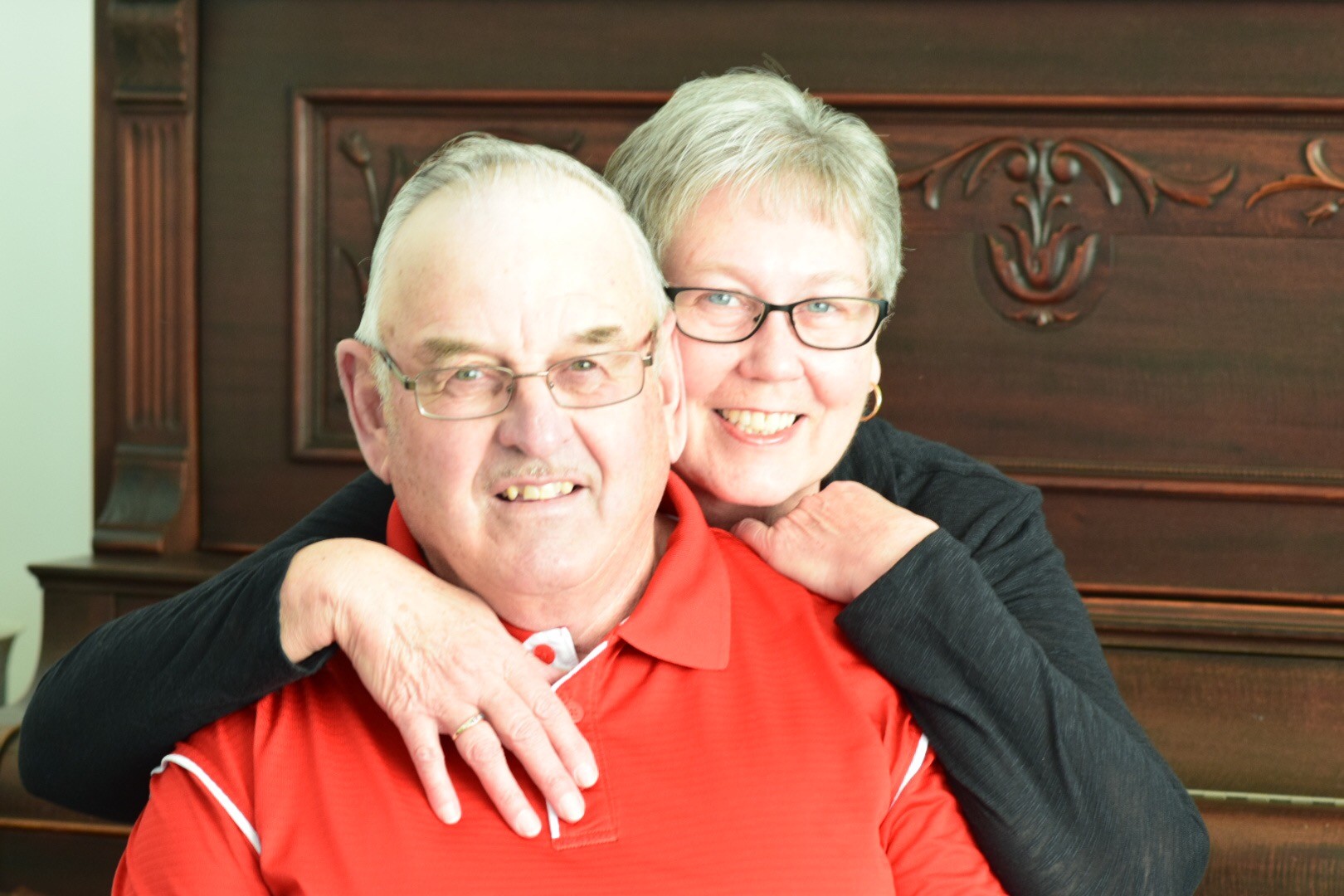 Shawna Gork's parents, Wayne and Gladys, have been a constant source of inspiration to her
One major challenge after another
In 2015, Gork’s parents were killed in a car crash.
“Your world just stops,” she said.
For months, she operated on autopilot, trying to support her family while navigating overwhelming grief. She reduced her workload and took educational leave when she could. Her coursework became less of a pressure and more of a lifeline. It was something steady she could return to when she had the energy.
During that time, a comment from her son stayed with her: “He said, ‘It’s hard to go to school every day, Mom, and pretend everything’s okay.’”
Gork credits her parents with instilling in her the resilience that carried her through the years that followed. Just three years later, she faced another devastating challenge when she was diagnosed with breast cancer in 2018.
That year, she underwent surgery, chemotherapy and 35 radiation treatments. Much of that time remains a blur, she said, adding all she remembers is the exhaustion, the uncertainty, and the long drives to treatment appointments.
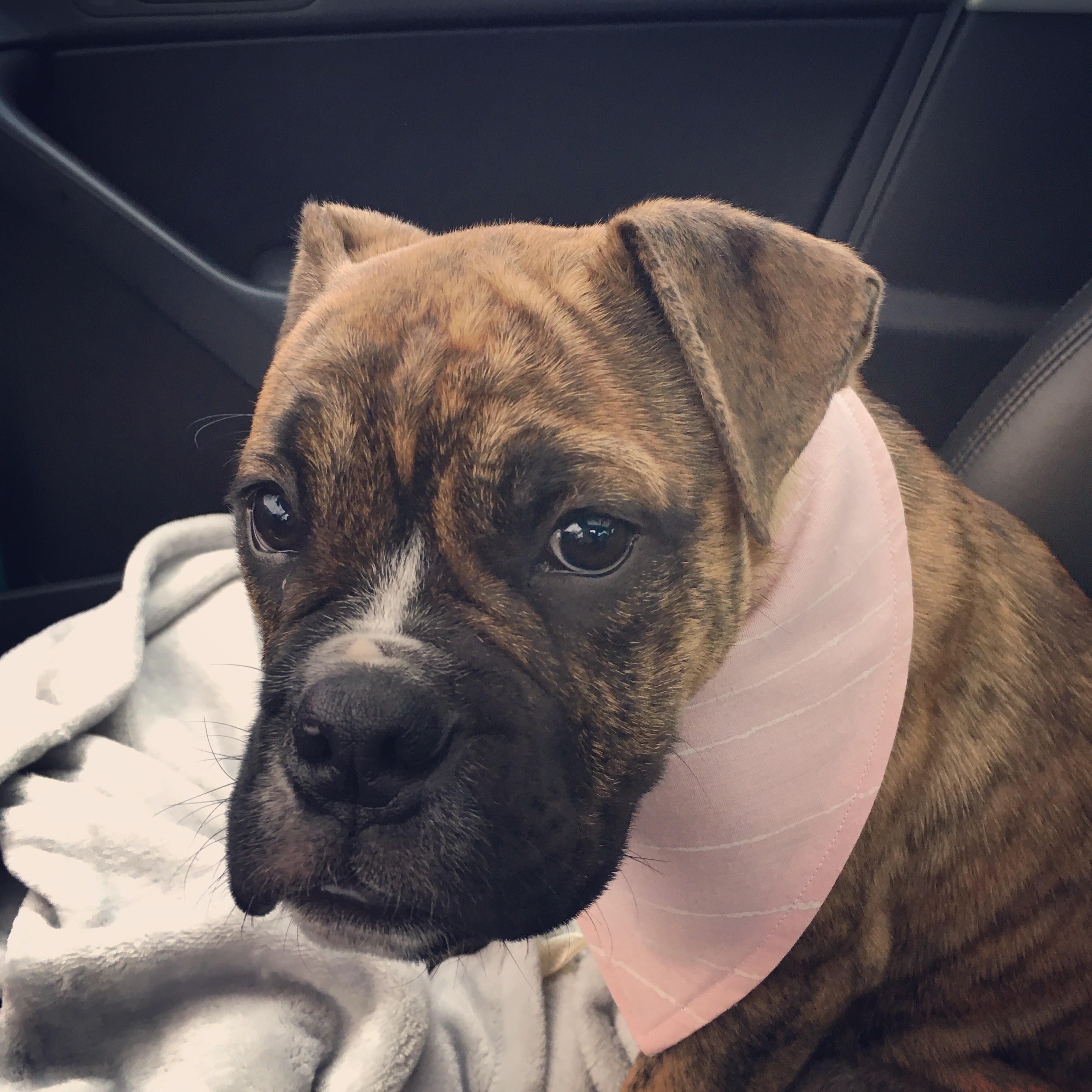 Clover, a bulldog who was Shawna Gork's constant companion through cancer treatment
She also remembers Clover, the bulldog puppy that became her constant companion during recovery and an invaluable source of support.
“We had a lot of talks. We solved the world’s problems and everything,” Gork said. “It was almost like a service dog to me.”
Once treatments ended, she slowly returned to her studies, taking some classes in person to rebuild momentum before transitioning back into online learning.
Then came COVID-19 in 2020.
As an immunocompromised front-line nurse, Gork faced enormous risks during the pandemic’s early days. She transitioned through a few nursing roles before taking a home-care supervisory role, after an oncologist warned her she could not safely remain on the front lines.
Within a week of starting the new job, which happened to be right next to a testing centre, she contracted COVID-19 anyway—before vaccines were available.
“So it just was one thing after another, and I just said, ‘Okay, well, here we go again!’” she said. “I strongly feel that my parents are watching over me and guiding me."
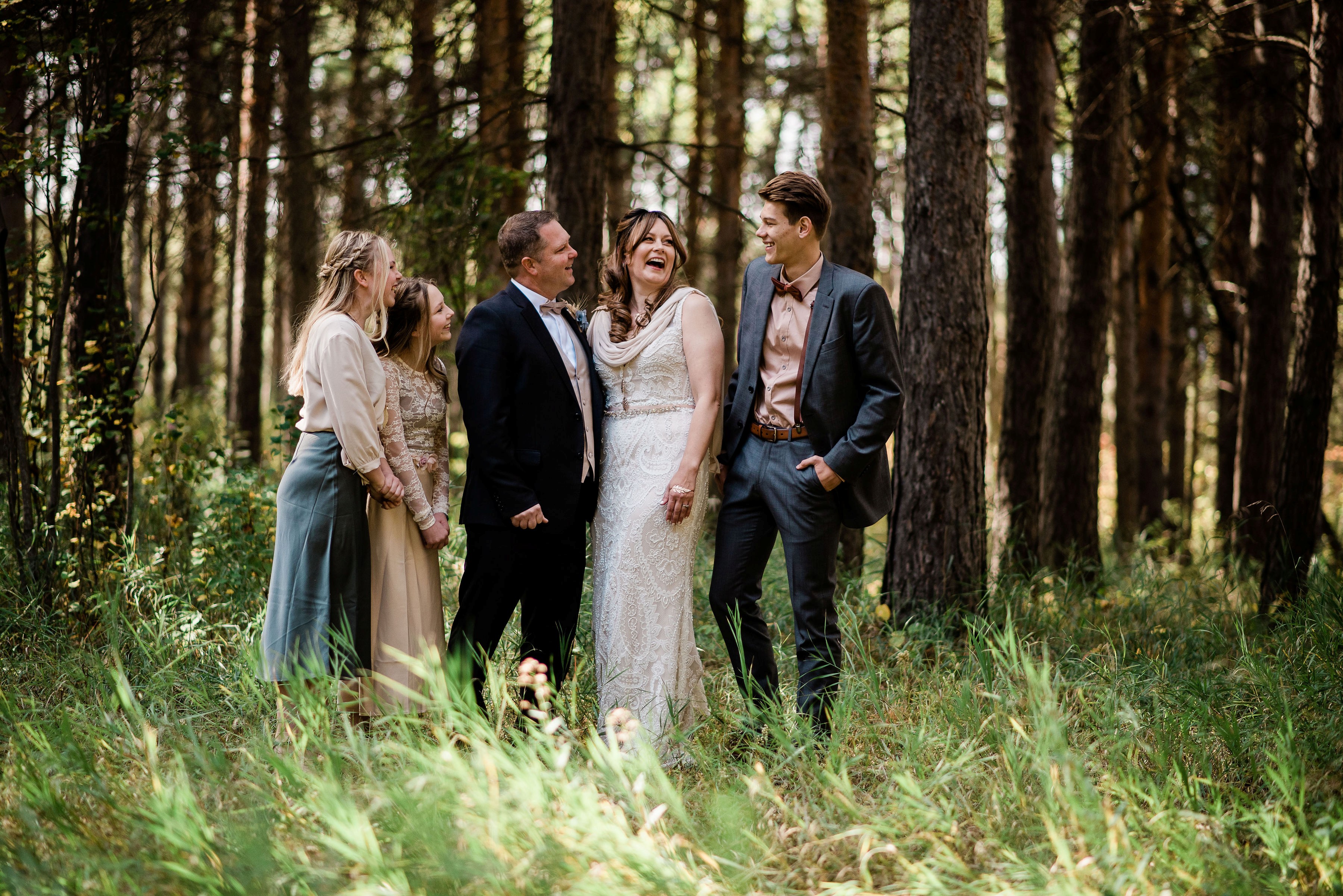 Shawna Gork with her family
Career advancement with nursing degree
It has been nearly one year since Gork finished her last course, and with a university degree in hand she has chosen to return to the work she was doing when she first got sick with cancer: home-care nursing, helping clients remain independent in their homes for as long as possible.
“I just love meeting people where they’re at,” she said. “This is a small part of that world of medicine that hasn't really changed that much, and we're still able to prevent somebody from coming into a hospital. We can prevent somebody from coming into a care home. And to me, that's a win.”
After everything Gork has endured, the degree represents more than career advancement. It is proof that progress does not have to happen quickly to make a meaningful impact.
“Some days it’s as easy as just convincing yourself to get out of bed,” she said. “But you keep going.”
The Bachelor of Nursing degree now hangs on the wall in her home office, where she walks past it every day. It can be easy to forget all that went into it, but her husband—one of her most steadfast supporters during this whole process—has encouraged her to pause and reflect on what this degree means.
“He said, ‘Despite all odds, you should be pretty freaking proud of yourself because you did it,” Gork said. “And I just started crying, because you know what? It was a crazy journey for 15 years, and here we are on the other side, thanks to my parents who gave me that strong foundation: great morals, work ethic, kindness, and humble beginnings. Their legacy of love endures.”